Patient care reports
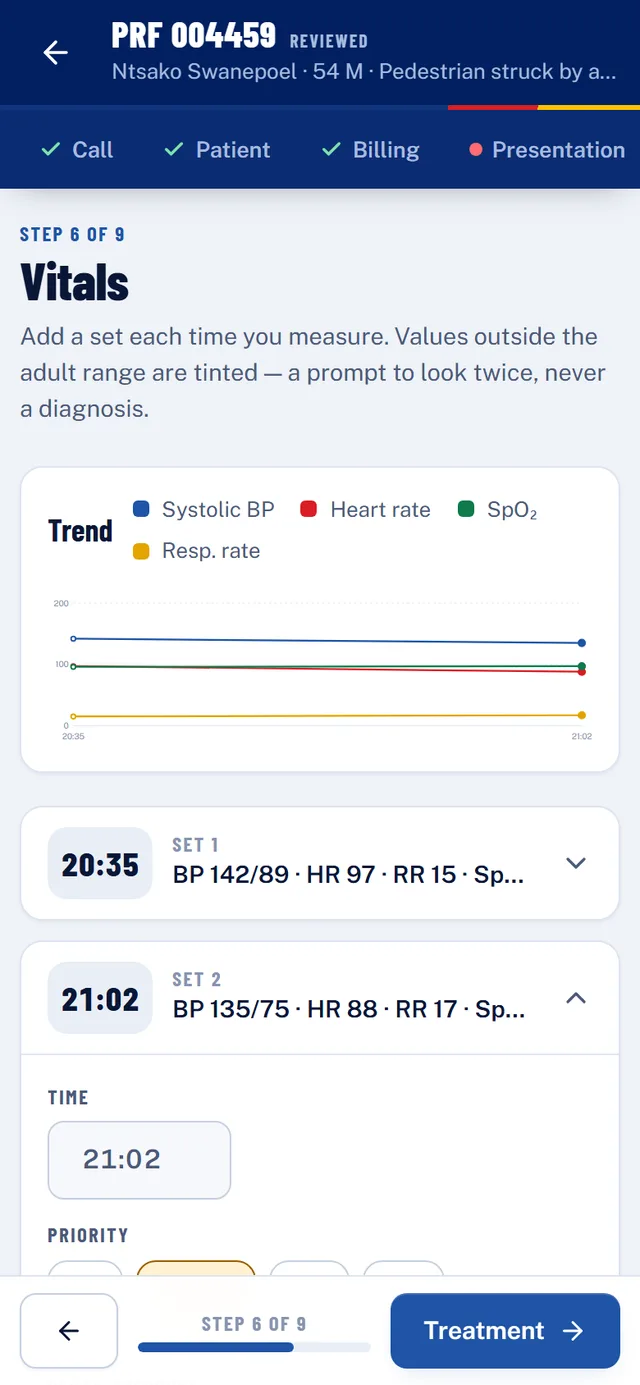
A guided ePCR (PRF) on the phone. Scan the ID and hospital sticker, pick ready-written notes, sign on screen. It saves itself, even without signal.

Ambulance & EMS software
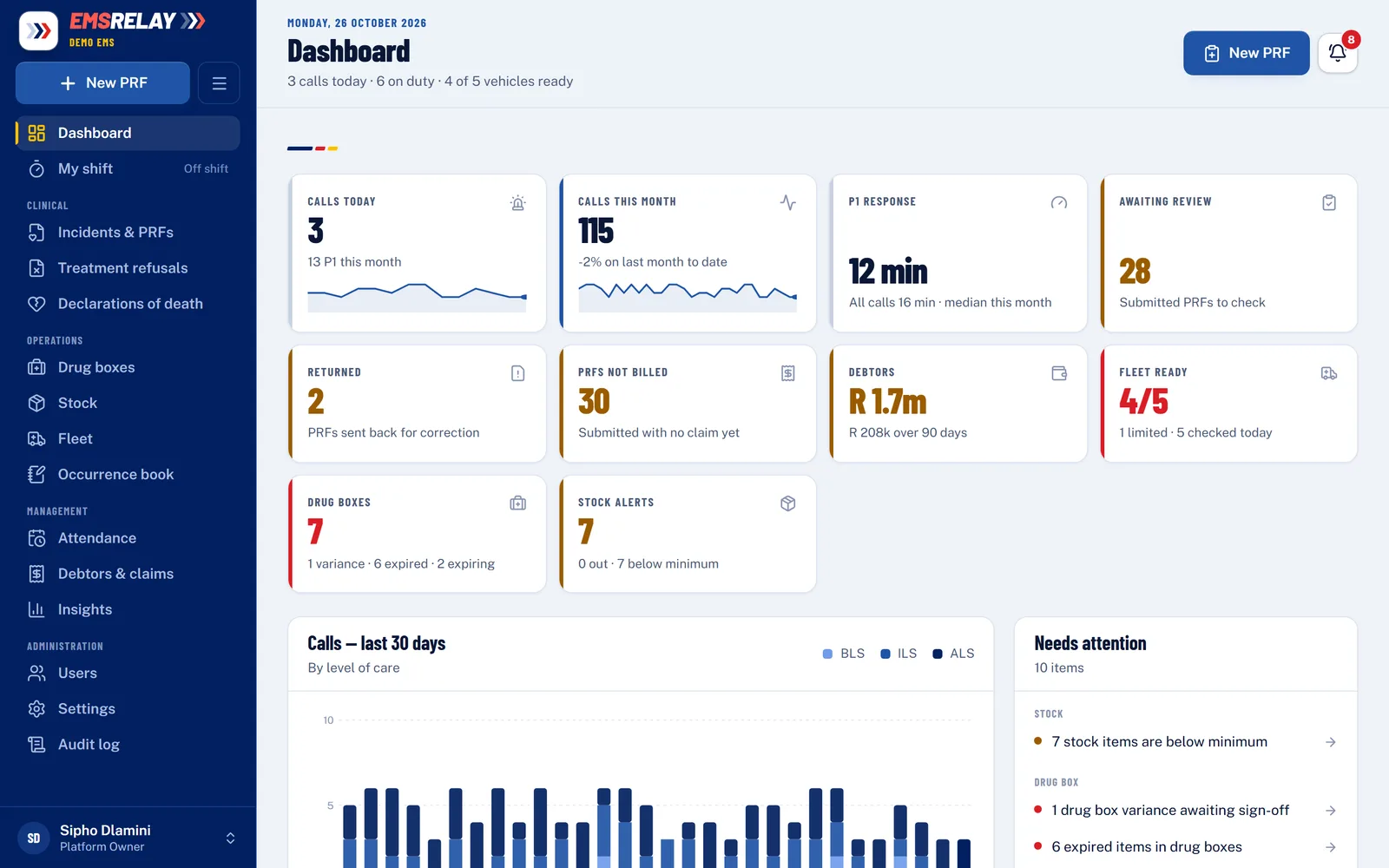
Crews finish the patient care report on scene. The office turns it into a claim. You see every call, every cent and every vehicle — in one place.
What it does
A guided ePCR (PRF) on the phone. Scan the ID and hospital sticker, pick ready-written notes, sign on screen. It saves itself, even without signal.
Every PRF becomes a claim priced from your tariffs. See what is outstanding, what is overdue and who to follow up today.
A live controlled-drug register for every box and slot. Each dose is signed out, and expiries and shortfalls are flagged before an audit finds them.
Daily vehicle checks, defects and licence reminders. Crews clock on to their shift and their vehicle.
Also included: clinical review · treatment refusals · declarations of death · occurrence book · attendance · reports
How it works
The crew completes the patient care report on a phone or tablet.
A clinical reviewer approves it, or sends it back with a note.
Billing builds the claim straight from the report — no retyping.
Every claim is tracked until the money is in.
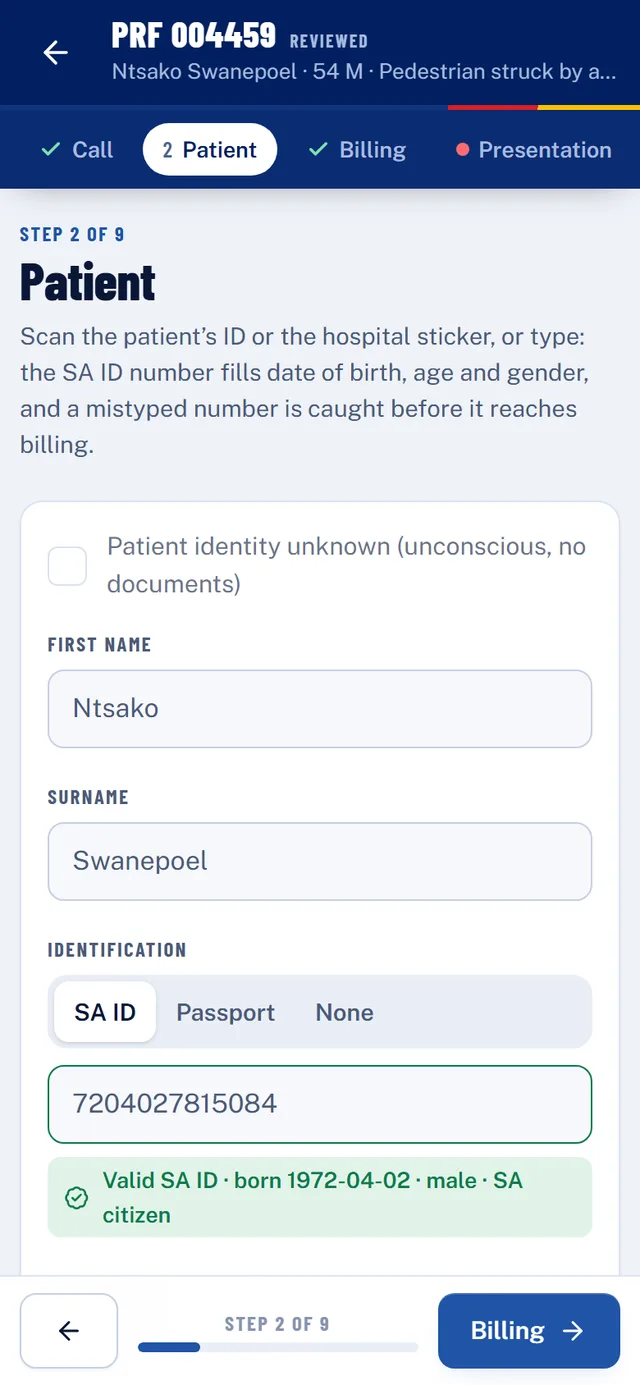
For the crew
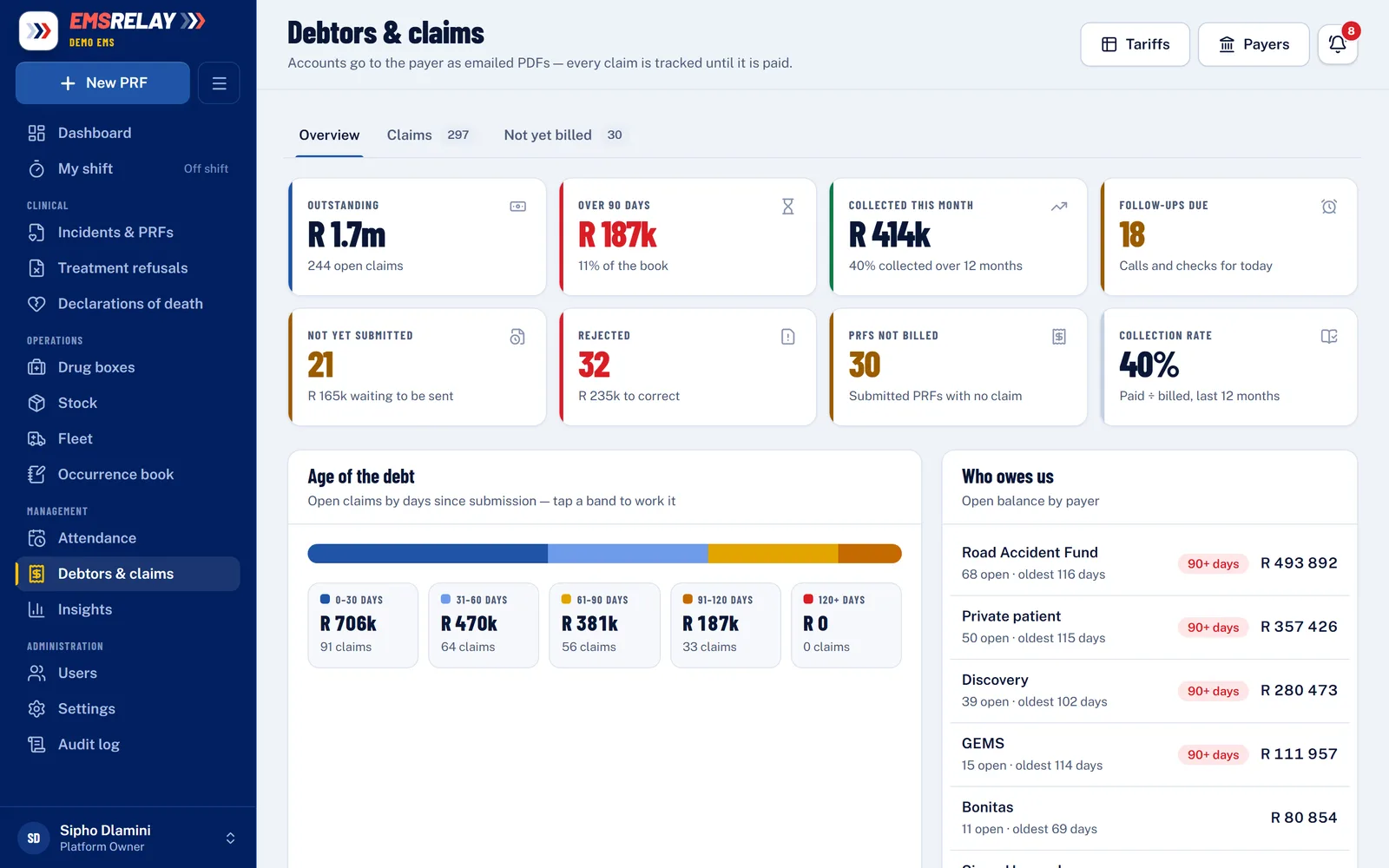
For the office
Security
Every user signs in with a password and a code from an authenticator app.
Your system can only be reached from inside your own country.
Each submitted PRF is sealed with a digital fingerprint, and every action is in the audit log.
Each service runs separately, on its own address, with its own data.
EMS Relay was designed together with a private ambulance service in Pretoria, South Africa — around their real patient reports, medical codes, drug boxes and billing rules. Not around a slide deck.
Questions
EMS Relay is software for private ambulance and EMS services. It puts the electronic patient care report (ePCR, also called a PRF), billing and claims, drug-box and controlled-drug registers, fleet checks and staff shifts in one system.
Private ambulance services, event medical services and inter-facility transfer operators — the crews on the road, the clinical reviewers, and the office that bills and gets paid.
Yes. The patient report saves on the device as the crew works and sends itself when signal returns.
No. EMS Relay runs in the web browser on any phone, tablet or PC, and crews can add it to their home screen like an app. There are no servers for you to run.
Yes. Each service is set up with its own ICD-10 and cause codes, drug lists and drug boxes, medical aids or insurers, and tariffs.
Every user signs in with a password and an authenticator code, access can be locked to your own country, every submitted report is sealed with a digital fingerprint, every action is in an audit log, and each service runs on its own separate system.
A 30-minute walkthrough using your call types, medical aids and tariffs.